What Does a Roof Leak Look Like in the Attic?
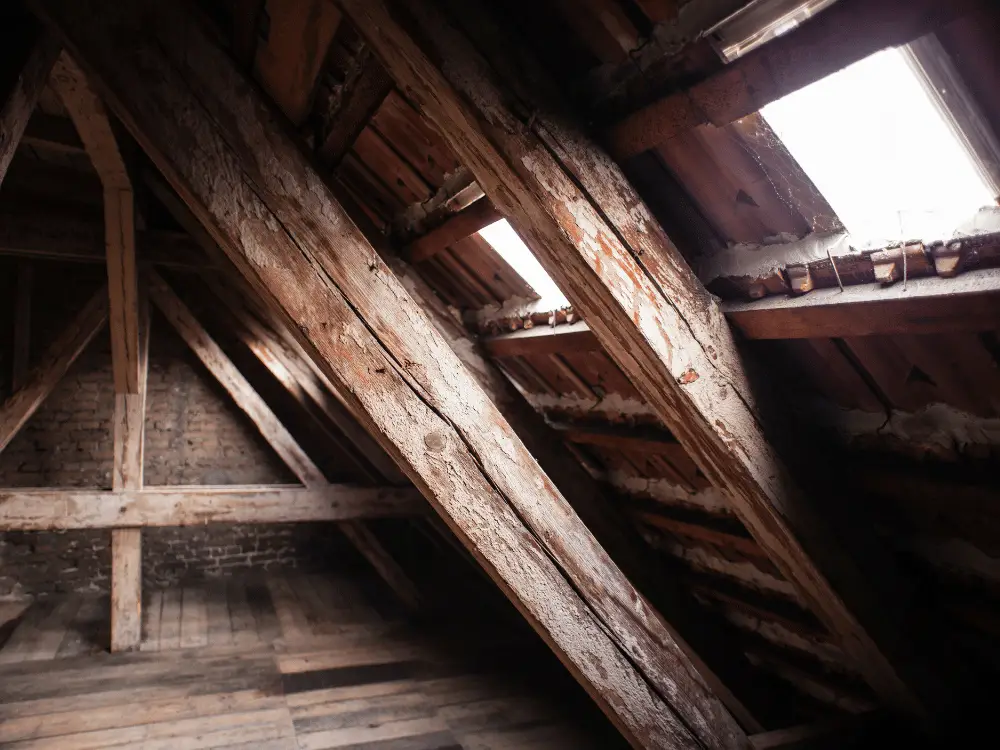
A roof leak in the attic often appears as dark stains on roof decking, wet insulation, water trails on framing, rusted roofing nails, mold growth, musty odors, or active dripping during rainfall. These are among the most common warning signs homeowners notice before water stains appear inside the home.
Water can travel before becoming visible, so the source of the leak is not always directly above the area showing moisture. While some attic moisture problems are caused by roof leaks, condensation, poor ventilation, and high humidity can create similar symptoms. A professional roof inspection can help determine whether moisture is entering through the roof or developing within the attic itself.
How Can You Tell If Your Attic Has a Roof Leak?
The most common signs of a roof leak in the attic include dark roof decking stains, wet insulation, rusted nails, water trails along framing, mold growth, musty odors, and active dripping during rain. The source of the leak may not be directly above the visible moisture because water often travels before becoming visible.
Quick Signs of a Roof Leak in the Attic
| Sign | What It May Indicate |
|---|---|
| Dark roof decking stains | Past or active moisture intrusion |
| Wet insulation | Water entering through the roofing system |
| Water trails on framing | Moisture traveling from another location |
| Rusted roofing nails | Elevated attic moisture levels |
| Musty odors | Possible mold or prolonged moisture exposure |
| Visible dripping | Active roof leak requiring prompt attention |
| Visible mold growth | Long-term moisture conditions |
| Warped roof decking | Extended moisture exposure |
Why the Attic Often Shows Roof Leak Signs First
In many homes, water enters the roofing system before reaching interior ceilings.
As moisture moves through roofing materials, it may affect:
- Roof decking
- Wood framing
- Insulation
- Fasteners
- Ventilation components
For this reason, attic spaces often reveal developing roofing problems before homeowners notice ceiling stains or damage inside living areas.
Attic Roof Leak Inspection Checklist
- Look for dark stains on roof decking.
- Check insulation for moisture or compression.
- Inspect nails for rust or water droplets.
- Look for mold or mildew growth.
- Examine framing for water trails.
- Inspect around chimneys and roof penetrations.
- Look for daylight entering through the roof system.
- Watch for active dripping during rainfall.
Common Signs of a Roof Leak in the Attic
Dark Stains on Roof Decking
One of the most common signs of a roof leak in the attic is dark discoloration on the underside of roof decking.
These stains may appear:
- Near chimneys
- Along roof valleys
- Around roof vents
- Beneath damaged flashing
- Near skylights
Dark stains do not always mean a leak is currently active, but they often indicate previous or ongoing moisture intrusion.
Wet or Compressed Insulation
Roof leaks frequently affect insulation before causing visible interior damage.
Warning signs include:
- Damp insulation
- Flattened insulation
- Discolored insulation
- Areas that feel heavier than surrounding insulation
Wet insulation may lose some of its insulating effectiveness and can retain moisture longer than homeowners realize.
Water Trails on Framing
Water often travels along rafters and framing before becoming visible.
Signs may include:
- Dark streaks on framing
- Visible water trails
- Moisture staining on structural members
- Repeated discoloration in the same location
The actual source of the leak may be several feet away from the location where the water trail appears.
Rusted Roofing Nails
Roofing nails visible from inside the attic can provide clues about moisture problems.
Signs may include:
- Rust formation
- Corrosion
- Moisture droplets on nail tips
- Clusters of rusted fasteners
While rust does not automatically confirm a roof leak, it often indicates elevated attic moisture levels.
Daylight Visible Through the Roof
If sunlight is visible through portions of the roofing system where it should not be, water may also be able to enter. Small openings around flashing, penetrations, or damaged roofing materials may allow both light and moisture intrusion.
Visible Mold or Mildew
Mold growth may occur when moisture remains present for extended periods.
Potential warning signs include:
- Dark discoloration
- Black, green, or gray spotting
- Musty odors
- Persistent moisture staining
Mold concerns should be evaluated carefully because both roof leaks and attic humidity issues can contribute to mold growth.
Can You See an Active Roof Leak in the Attic?
Sometimes.
During rainfall, homeowners may observe:
- Water dripping from roof decking
- Moisture around penetrations
- Water running along framing
- Wet insulation beneath the leak area
However, not every roof leak produces visible dripping. Some leaks occur only under certain weather conditions, such as wind-driven rain or severe storms.
Can Condensation Look Like a Roof Leak?
Yes.
Some attic moisture problems may result from:
- Poor ventilation
- High humidity
- Bathroom exhaust discharge issues
- Insulation deficiencies
- Temperature differences between surfaces
Because condensation and roof leaks can produce similar symptoms, proper diagnosis is important before repairs begin.
Is It Safe to Enter an Attic During a Roof Leak?
Homeowners should use caution when entering an attic during or immediately after a storm.
Potential hazards include:
- Wet surfaces
- Electrical hazards
- Damaged roof decking
- Poor visibility
- Hidden fall hazards beneath insulation
If active leaking is occurring near electrical wiring, lighting fixtures, or junction boxes, avoid entering the attic and contact a qualified professional.
Never step directly on exposed insulation. Attics often contain hidden gaps between framing members that can create fall hazards.
What Areas of the Attic Should Be Checked?
| Area | Why It Matters |
|---|---|
| Roof Decking | Moisture staining and deterioration often appear here first. |
| Roof Valleys | Large amounts of water travel through valleys. |
| Chimneys | Flashing failures commonly occur in these areas. |
| Roof Vents | Penetrations can become leak sources. |
| Skylights | Roof openings increase leak potential. |
| Insulation | Wet insulation often reveals moisture intrusion. |
Can a Small Roof Leak Cause Significant Attic Damage?
Yes.
Small leaks may remain unnoticed for extended periods, allowing moisture to affect:
- Roof decking
- Insulation
- Framing
- Ventilation systems
- Interior building materials
Because these leaks often develop gradually, they may create more widespread damage before they become obvious.
When Should a Roof Inspection Be Scheduled?
Homeowners should consider scheduling a roof inspection if they notice:
- Dark attic stains
- Wet insulation
- Musty odors
- Mold concerns
- Visible dripping during storms
- Repeated ceiling stains
- Missing shingles after severe weather
Early inspection can help identify the source before more extensive repairs become necessary.
How Triangle Weather Can Affect Attic Moisture
Homes throughout Apex, Cary, Holly Springs, Fuquay-Varina, Raleigh, Morrisville, Durham, Chapel Hill, and surrounding communities regularly experience weather conditions that can contribute to attic moisture concerns.
These conditions include:
- High humidity
- Wind-driven rain
- Severe thunderstorms
- Tropical systems
- Hurricane remnants
- Heavy pollen accumulation
- Mature tree canopy exposure
Homes throughout the Triangle frequently experience humidity, severe thunderstorms, tropical systems, and wind-driven rain that can allow moisture to enter attics even when damage is not immediately visible from the ground.
These weather patterns make attic inspections especially important after severe storms and extended wet weather.
Frequently Asked Questions
What is the most common sign of a roof leak in the attic?
Dark stains on roof decking, wet insulation, and water trails on framing are among the most common signs.
Can attic condensation look like a roof leak?
Yes. Condensation caused by poor ventilation and high humidity can produce symptoms similar to a roof leak.
Should attic insulation be wet?
No. Wet insulation typically indicates a moisture problem that should be investigated.
Can a roof leak cause mold in the attic?
Yes. Moisture entering through roofing defects can create conditions that support mold growth.
Can roof leaks travel before becoming visible?
Yes. Water may travel along framing, decking, underlayment, and insulation before becoming visible inside the home.
Should I enter my attic during a roof leak?
Use caution. Wet surfaces, electrical hazards, damaged decking, and poor visibility can create unsafe conditions.
Can a small roof leak damage the attic?
Yes. Even small leaks can cause significant damage when moisture remains present for an extended period.
When should I schedule a roof inspection after finding attic moisture?
A professional roof inspection is recommended whenever homeowners notice attic stains, wet insulation, water trails, musty odors, mold concerns, or active water intrusion.
Suggested Links
- can roof leaks cause mold
- Emergency roof leak: what to do
- professional roof inspection after storm damage
- Mold Removal Service in Apex
Get your free inspection today—no obligation, perfect for on-the-go homeowners.
Schedule Your FREE Roof Inspection Now
Call: (919) 906-3791 | Family-owned | Serving Apex, Cary, Raleigh, Holly Springs, Fuquay-Varina & Triangle NC