How Attic Ventilation Affects Roof Lifespan in Humid Climates
Here in Apex and across the Triangle, our heat and humidity create some of the toughest conditions for asphalt shingles. Most homeowners focus on the shingles themselves, but one of the biggest factors in how long a roof lasts is actually inside the home: attic ventilation. When airflow is balanced and consistent, shingles hold up better, energy bills stay steadier, and moisture problems are far less common. When ventilation is poor, roofs age faster—sometimes years faster than expected.
Why attic ventilation matters in North Carolina
Attic ventilation controls two things that directly affect roof lifespan: heat and moisture. In our part of North Carolina—especially around Apex, Cary, Holly Springs, and Raleigh—both can build up quickly due to long summers and high humidity.
- Heat buildup: Summer attic temperatures can climb well above 140°F, baking shingles from below.
- Humidity: Moist air trapped in the attic can condense on decking and insulation.
- Storm cycles: Rapid temperature swings during summer storms stress shingles and sealants.
- Tree coverage: Shade slows drying, which increases moisture retention.
Good ventilation helps your roof handle these conditions more effectively and consistently.
How attic ventilation works
A healthy attic ventilation system has two parts working together:
- Intake vents: Usually located in the soffits, bringing cooler outside air into the attic.
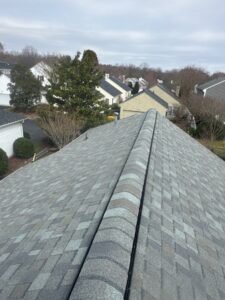
- Exhaust vents: Often ridge vents, allowing hot, moist air to escape at the roof peak.
When intake and exhaust are balanced, air flows naturally through the attic, reducing heat and moisture buildup without relying on mechanical fans.
Signs your attic may not be ventilating properly
Ventilation issues often show up long before a leak appears. Around the Triangle, homeowners commonly notice:
- Hot upstairs rooms, especially in summer
- Musty or damp odors in the attic
- Condensation on nails or the underside of decking
- Shingles curling or aging faster than expected
- Dark streaks or moisture staining on rafters
How poor ventilation shortens roof lifespan
Shingles are designed to handle weather from above—not extreme heat from below. When ventilation is inadequate:
- Shingles deteriorate faster: Excess heat accelerates granule loss and brittleness.
- Decking weakens: Moisture softens wood and encourages mold growth.
- Sealants fail sooner: Temperature swings cause cracking and separation.
- Energy bills rise: Hot attics make HVAC systems work harder.
These issues can shorten a roof’s lifespan by several years, especially in humid areas like ours.
Best ventilation practices for humid climates
Homes in the Triangle benefit from ventilation systems designed specifically for heat and humidity. Effective strategies include:
- Continuous ridge vents: Provide even exhaust along the roof peak.
- Soffit vents: Ensure consistent intake airflow.
- Avoiding power fans: These can pull conditioned air from the home instead of ventilating naturally.
- Keeping soffits clear: Insulation should never block intake vents.
How gutters affect attic ventilation and roof health
Gutters may not seem connected to ventilation, but poor drainage can increase attic moisture. Overflowing gutters can soak fascia boards and roof edges, allowing moisture to migrate upward into the attic.
Our team often coordinates with Quality Seamless Gutters to make sure your roof and gutter system work together to protect your home.
Helpful roofing resources
Artisan Quality Roofing resources
Glossary of ventilation and roofing terms
- Intake vent
- A vent that allows fresh air to enter the attic, usually located in the soffits.
- Exhaust vent
- A vent that allows hot, moist air to escape from the attic, often through the ridge.
- Ridge vent
- A continuous vent installed along the roof peak for consistent airflow.
- Soffit
- The underside of the roof overhang where intake vents are commonly installed.
- Decking
- The wood surface beneath shingles; moisture‑damaged decking must be replaced.
- Condensation
- Moisture that forms when warm, humid air meets a cooler surface—common in poorly ventilated attics.
FAQs about attic ventilation in humid climates
Can poor ventilation void a shingle warranty?
Yes. Many manufacturers require proper ventilation for full warranty coverage.
Do all homes need ridge vents?
Most homes in our area benefit from ridge vents, but the best setup depends on roof design and available intake.
Can I improve ventilation without replacing my roof?
Often, yes. Adding soffit vents, clearing blocked vents, or upgrading airflow can usually be done independently.
Get a Clear, Honest Roof Evaluation
Our Apex‑based team provides photo‑documented inspections and straightforward recommendations for homeowners in Cary, Holly Springs, Raleigh, and the greater Triangle. No pressure—just clarity and trustworthy guidance.
Prefer to talk? Call (919) 906‑3791