What Should You Do When Your Roof Is Actively Leaking?
If your roof is actively leaking, move people, pets, and belongings away from the affected area. Avoid electrical fixtures, outlets, and wet ceilings. Contain water only when it is safe, document visible damage, and contact a roofing professional. Do not climb onto a wet, steep, or storm-damaged roof.
A roof leak may originate from damaged shingles, flashing, a pipe boot, a valley, a roof penetration, or another vulnerable area. The visible ceiling stain is not always directly below the entry point because water can travel before becoming visible inside the home.
First, Protect People and Avoid Electrical Hazards
- Keep everyone away from bulging or sagging ceiling areas.
- Do not touch wet light fixtures, switches, outlets, or wiring.
- Do not enter an attic during unsafe storm conditions.
- Stay away from downed power lines and damaged trees.
- Call emergency services or your utility provider if electrical or structural danger is suspected.
Review the National Weather Service’s post-storm safety guidance before assessing exterior storm damage.
Limit Interior Water Damage When It Is Safe
Place a container beneath dripping water if the area is stable and clear of electrical hazards. Move furniture, rugs, electronics, and valuables away from the leak. Use towels or plastic sheeting to protect surfaces where practical.
Do not puncture a bulging ceiling or remove wet materials unless a qualified professional has determined the area is safe. Water-soaked drywall can fail unexpectedly.
Document What You Can See
Photos and notes can help document how the leak developed. From a safe location, record:
- Interior stains or active dripping
- Wet flooring or damaged belongings
- Shingle pieces in the yard
- Fallen limbs or visible exterior damage
- The date and approximate time the leak appeared
- Recent weather conditions
Do not delay necessary safety measures simply to take photographs.
Should You Put a Tarp on the Roof Yourself?
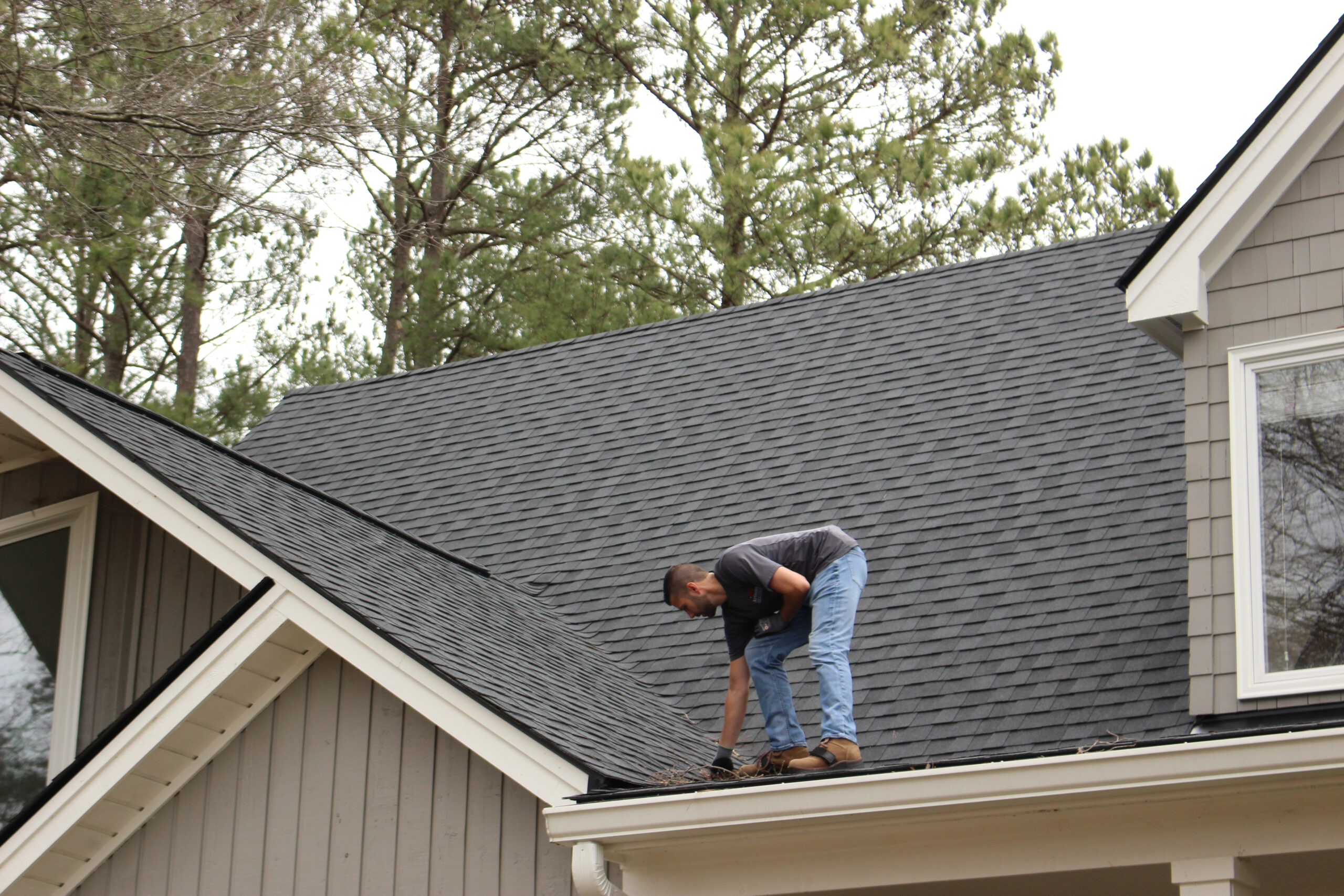
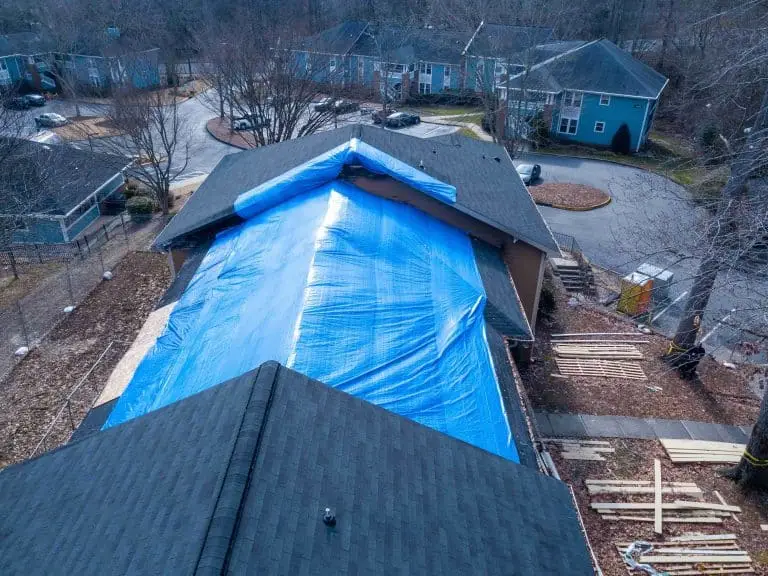
Homeowners should not climb onto a wet or storm-damaged roof. Temporary coverings must be secured properly and installed without causing additional damage. Improper tarping can allow more water into the home, damage roofing materials, or create a serious fall hazard.
Learn more about /need-a-tarp-for-your-leaky-roof/temporary roof tarping and emergency leak protection before attempting any temporary measures.
What Can Cause an Emergency Roof Leak?
| Possible Cause | What May Be Happening |
|---|---|
| Missing or Lifted Shingles | Wind may expose underlayment or break the roof’s water-shedding system. |
| Failed Flashing | Water may enter around chimneys, sidewalls, valleys, skylights, or roof transitions. |
| Deteriorated Pipe Boot | The seal around a plumbing penetration may crack, split, or separate over time. |
| Fallen Tree Limbs or Debris | Branches and debris can damage shingles, flashing, decking, or roof penetrations. |
| Blocked Drainage | Leaves, pine needles, and debris may prevent water from draining properly. |
| Previous Repair Failure | Older sealants, patches, or temporary repairs may have deteriorated. |
| Roof Decking Damage | Long-term moisture exposure or structural damage may weaken the roof beneath the shingles. |
What Will a Roof Inspection Look For?
A professional roof inspection after storm damage may evaluate shingles, flashing, pipe boots, vents, valleys, visible decking concerns, gutters, drainage systems, and accessible attic areas.
The goal is to identify the most likely entry point, document visible conditions, and determine whether m
When Is an Emergency Repair Appropriate?
An isolated repair may be practical when the source can be identified and the surrounding roofing system remains serviceable. Examples include a failed pipe boot, a localized flashing issue, a limited number of damaged shingles, or a small area affected by debris.
Widespread deterioration, repeated leaks, extensive storm damage, or soft roof decking may require a broader solution. Homeowners can learn more about when inspection findings may point to roof replacement.
How Triangle Weather Contributes to Roof Leaks
Homes throughout the Triangle experience severe thunderstorms, tropical systems, wind-driven rain, falling limbs, pollen, pine needles, humidity, and tree debris. These conditions can damage shingles, loosen flashing, clog drainage paths, and contribute to roof leaks.
If drainage problems are contributing to water intrusion, Quality Seamless Gutters can evaluate the gutter system separately.
What Not to Do During a Roof Leak
- Do not climb onto the roof during or immediately after a storm.
- Do not stand beneath a sagging ceiling.
- Do not touch wet electrical fixtures.
- Do not assume the visible stain marks the exact entry point.
- Do not paint over water damage before identifying the source.
- Do not sign insurance-related agreements you do not fully understand.
Frequently Asked Questions
Is every roof leak an emergency?
Any active roof leak deserves prompt attention. Electrical hazards, sagging ceilings, structural concerns, or rapidly entering water require especially urgent action.
Can I find the leak from inside the attic?
Accessible attic staining may help identify the general area, but water can travel before becoming visible. Do not enter an attic during unsafe conditions or when electrical hazards may be present.
Should I file an insurance claim immediately?
Document visible conditions and obtain an inspection before making assumptions about coverage. The insurance company determines whether a claim is covered under the policy.
Can sealant stop an emergency roof leak?
Sealant may temporarily reduce water intrusion, but it often does not address the underlying cause. A dependable repair should focus on the failed roofing component and surrounding conditions.
Will a roof leak require replacement?
Not always. Many roof leaks can be repaired when the damage is isolated. Replacement may be considered when deterioration, storm damage, or moisture-related issues are widespread.
Get your free inspection today—no obligation, perfect for on-the-go homeowners.
Schedule Your FREE Roof Inspection Now
Call: (919) 906-3791 | Family-owned | Serving Apex, Cary, Raleigh, Holly Springs, Fuquay-Varina & Triangle NC