Does North Carolina Have a 25% Roof Rule?
Quick answer: North Carolina does not have a simple statewide residential roofing rule that automatically requires an entire roof to be replaced when more than 25% is damaged. Roof repair and replacement requirements depend on the applicable building code, roof condition, existing materials, proposed scope of work, permit requirements, and the local authority responsible for code enforcement.
The phrase “25% roof rule” is frequently used in online roofing and insurance discussions. This has led many homeowners to believe that damage affecting more than one-quarter of a roof automatically requires a complete roof replacement.
That is not an accurate way to describe residential roofing requirements in North Carolina.
For homeowners throughout the Triangle, the real question is not simply what percentage of the roof is damaged. The more useful question is whether the roofing system can be safely and effectively repaired while complying with current code and local permitting requirements.
Where Does the 25% Roof Rule Come From?
The term “25% roof rule” generally refers to percentage-based roofing provisions used in certain jurisdictions or code applications. Under some versions of these provisions, replacing more than 25% of a roof covering within a specified period can trigger additional code-compliance requirements.
However, roofing codes are not identical in every state or municipality.
A roofing requirement used in Florida or another jurisdiction should not automatically be applied to a home in Apex, Cary, Raleigh, Durham, or another North Carolina community.
Online explanations often create confusion by combining:
- Residential and commercial roofing requirements
- Different state building codes
- Different editions of model building codes
- Insurance coverage requirements
- Roof repair and roof-recover provisions
- Local permitting interpretations
Before relying on any percentage-based rule, the homeowner or contractor should verify which code applies to the property and how the local inspections department interprets the proposed work.
What Does North Carolina Code Say About Roof Replacement?
North Carolina residential roofing requirements address reroofing, removal of existing materials, roof recover applications, and the condition of the existing roofing system.
When a project is classified as a roof replacement, existing roof-covering layers generally must be removed down to the roof deck. The exposed deck can then be evaluated before the new roofing system is installed.
North Carolina residential roofing provisions also restrict installing a new roof covering over an existing roof in certain circumstances.
When might a roof recover not be permitted?
A roof recover may not be appropriate when:
- The existing roofing is water-soaked.
- The existing roof covering is significantly deteriorated.
- The existing material cannot provide an adequate base for the new roof covering.
- Certain existing roof-covering materials are present.
- The roof already has multiple applications of roof covering.
- The roof deck or underlying roofing components require repair.
These requirements focus on the condition and construction of the roofing system. They are different from an automatic rule based only on the percentage of roof damage.
How Is the Percentage of Roof Damage Calculated?
Although a percentage does not automatically determine whether a North Carolina roof requires replacement, measuring the affected area is still useful.
Roof-area calculations can help contractors:
- Document storm damage
- Prepare a repair estimate
- Estimate roofing materials
- Compare repair and replacement options
- Prepare information for an insurance claim
- Discuss the proposed scope with permitting officials
Use this formula to calculate the affected percentage:
Affected roof area ÷ total applicable roof area × 100 = percentage affected
Roof-area calculation example
| Total Roof Area | Affected Area | Percentage Affected |
|---|---|---|
| 2,000 sq. ft. | 300 sq. ft. | 15% |
| 2,000 sq. ft. | 500 sq. ft. | 25% |
| 2,000 sq. ft. | 700 sq. ft. | 35% |
For example, if 700 square feet of a 2,000-square-foot roof is affected, the calculation is:
700 ÷ 2,000 × 100 = 35%
This result documents the percentage of roof area affected. It does not, by itself, establish that the entire roof must be replaced or that an insurance policy must cover a complete replacement.
Is the Calculation Based on Damaged Shingles or Roof Area?
The most useful calculation is generally based on measurable roof area rather than the number of visibly damaged shingles.
Counting shingles alone may not accurately represent the proposed repair because damage can affect:
- Individual shingles
- Several courses of shingles
- An entire roof slope
- Flashing around walls or chimneys
- Roof valleys
- Ridge caps
- Underlayment
- Roof decking
The damaged area and the area that must be disturbed to complete a reliable repair may also be different. Brittle shingles around the damaged area can increase the practical repair scope.
Who Determines Whether a Roof Can Be Repaired?
Several parties may be involved in a North Carolina roofing project, but each party has a different role.
- The roofing contractor inspects the roof, documents visible conditions, measures affected areas, and proposes a repair or replacement scope.
- The local code official determines how the applicable building code and permitting requirements apply to the project.
- The insurance carrier makes coverage decisions based on the policy, cause of loss, and claim investigation.
- The homeowner decides whether to proceed with the proposed work and any upgrades that may not be covered by insurance.
A contractor can recommend a roofing solution, but the contractor does not replace the local authority’s code determination. Likewise, a code requirement does not automatically determine what an insurance policy will pay.
How This Affects Homeowners Throughout the Triangle
Homeowners throughout the Triangle often hear about the “25% roof rule” after a severe storm, roofing inspection, or insurance claim.
Across Apex, Cary, Holly Springs, Fuquay-Varina, Raleigh, Morrisville, Garner, Durham, Chapel Hill, and surrounding communities, roof repair decisions are commonly influenced by the condition of the entire roofing system rather than a single percentage.
Homes throughout the surrounding region regularly experience:
- Severe thunderstorms
- Hurricane and tropical-system remnants
- Strong wind gusts
- Wind-driven rain
- High summer heat
- Humidity and moisture
- Heavy pollen accumulation
- Tree canopy exposure
- Falling limbs and storm debris
- Algae growth on shaded roof slopes
These local conditions can create roofing problems that are not limited to one obvious area.
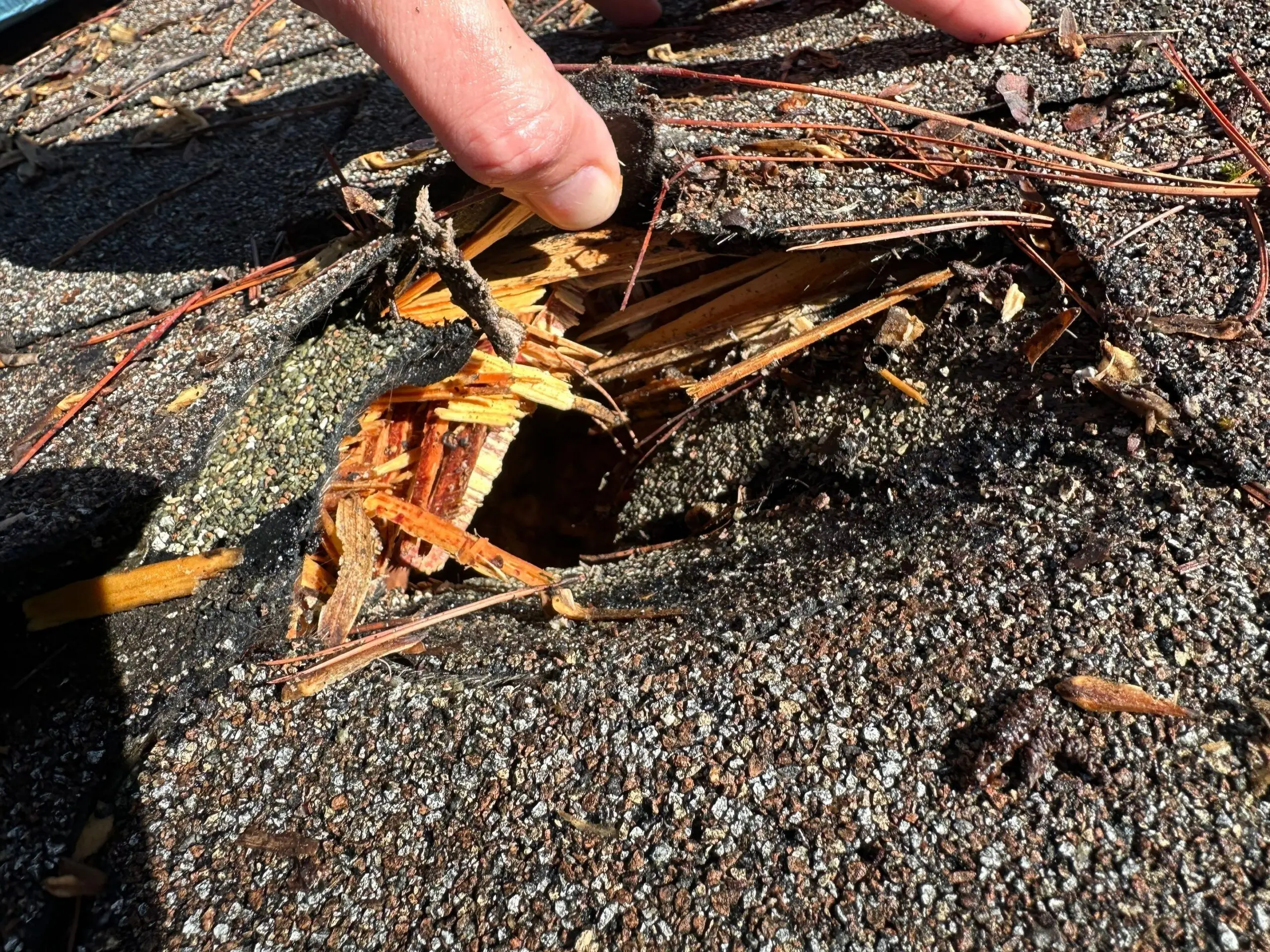
A wind event may loosen shingles on several elevations. Falling branches can damage shingles, underlayment, flashing, and decking. Wind-driven rain can enter through a vulnerable roof penetration even when the surrounding shingles appear intact.
Roofing concerns in heavily wooded communities
Homes in established communities with mature trees may experience more debris accumulation, falling limbs, shaded roof surfaces, and moisture retention.
Neighborhoods such as Lochmere, MacGregor Downs, Preston, Amberly, Bella Casa, Sunset Ridge, 12 Oaks, Bedford, North Hills, Brier Creek, and Governor’s Club can include wooded lots and varied roof designs that make a complete inspection especially important after severe weather.
Neighborhood conditions do not determine whether a roof must be replaced. However, tree exposure, roof complexity, drainage patterns, and limited sunlight can influence roof condition and repairability.
Roofing concerns in growing Triangle communities
Newer homes throughout Apex, Holly Springs, Fuquay-Varina, Morrisville, Garner, and neighboring communities may have relatively young roofing systems that are better candidates for isolated repairs when damage is limited.
However, roof age alone does not settle the repair-versus-replacement question. Installation quality, storm exposure, attic ventilation, material condition, and the location of the damage must also be considered.
When Can a Roof Repair Become Impractical?
A repair may be technically possible but still offer poor long-term value.
Replacement may deserve consideration when:
- Damage affects multiple roof slopes.
- Existing shingles are brittle or deteriorated.
- Surrounding shingles break during normal repair work.
- Compatible replacement shingles are unavailable.
- The roof has experienced recurring leaks.
- Previous repairs are beginning to overlap.
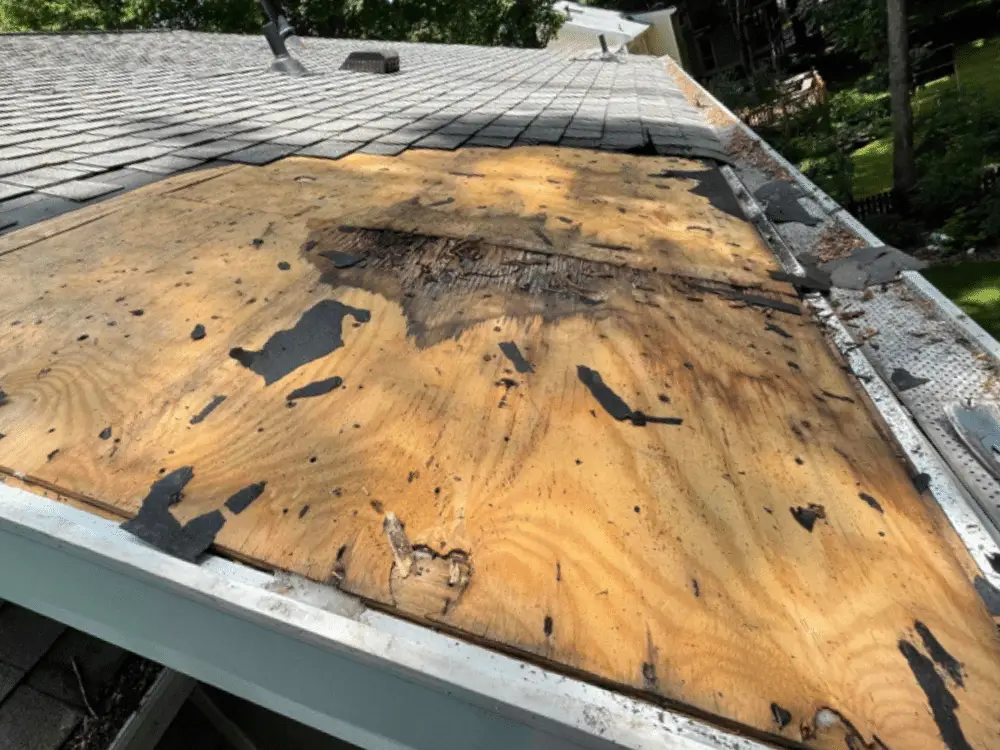
- Roof decking has moisture damage or deterioration.
- The roof has multiple layers of existing material.
- The roofing system is approaching the end of its useful service life.
A thorough professional roof inspection can help identify whether an isolated repair is practical or whether broader work should be considered.
Roof Repair vs. Roof Replacement
| Roof Condition | Repair May Make Sense | Replacement May Make Sense |
|---|---|---|
| Small, isolated area of damage | Yes | Usually not based on size alone |
| Newer, flexible shingles | Often | Depends on the total damage |
| Multiple damaged roof slopes | Possibly | Worth evaluating |
| Brittle or discontinued shingles | May be difficult | May provide better long-term value |
| Water-soaked or deteriorated roofing | May not provide an adequate repair base | May be necessary |
| Two or more existing roof-covering applications | Recovering may be restricted | Removal may be required |
| Extensive roof-deck deterioration | Limited repair may be insufficient | Broader replacement may be appropriate |
| Roof near the end of its service life | May provide only temporary value | Often worth comparing |
Homeowners comparing the financial side of both options can also review the factors that affect roof replacement cost.
What Should a Triangle-Area Roof Inspection Include?
A roof inspection should evaluate more than the visible shingle surface.
A complete assessment may include:
- Shingle condition
- Missing, lifted, creased, or damaged shingles
- Roof decking
- Underlayment where visible or exposed
- Wall and chimney flashing
- Pipe boots and roof penetrations
- Open and closed valleys
- Ridge caps
- Roof ventilation components
- Drip edge
- Gutters and downspouts
- Attic or interior signs of water intrusion
Roof-deck condition is especially important when moisture damage or repeated leakage is suspected. Learn more about whether damaged roof decking can be repaired or must be replaced.
Drainage should also be considered when roof runoff is overflowing, backing up, or collecting near the home. Homeowners experiencing drainage concerns can learn more from https://qualityseamlessgutters.com/Quality Seamless Gutters.
Does Insurance Pay for a New Roof When More Than 25% Is Damaged?
No. Damage affecting more than 25% of a roof does not automatically require an insurance company to pay for a complete roof replacement.
Insurance coverage depends on the policy and the facts of the individual claim.
An insurance carrier may consider:
- The cause of the damage
- Whether the cause of loss is covered
- The documented scope of damage
- The roof’s age and condition
- Whether the affected area can be repaired
- Applicable deductibles
- Policy exclusions
- Coverage endorsements
- Depreciation provisions
- Ordinance or law coverage
Building-code compliance and insurance coverage are separate determinations. A code requirement may influence the required construction scope, but the policy determines whether and how that cost is covered.
Homeowners preparing a claim can review these tips for filing a roof insurance claim.
What Is Ordinance or Law Coverage?
Ordinance or law coverage is insurance-related coverage that may help with certain additional costs required to comply with current building codes after a covered loss.
The availability, limits, conditions, and exclusions of this coverage depend on the individual insurance policy.
Homeowners should review:
- The policy declarations
- Coverage endorsements
- Ordinance or law limits
- Exclusions
- Deductibles
- Replacement-cost or actual-cash-value provisions
Homeowners can also consult the https://www.ncdoi.gov/North Carolina Department of Insurance for consumer insurance information.
What If Matching Shingles Are Unavailable?
Unavailable or visibly different shingles can affect whether a repair is practical, but material matching and code compliance are separate questions.
Matching concerns may involve:
- Discontinued shingle lines
- Changes in shingle dimensions
- Changes in color blends
- Fading and weathering of the existing roof
- Differences in thickness or installation pattern
- Manufacturer installation requirements
A contractor should document the existing material and determine whether a compatible product is available. Insurance coverage for matching depends on the language and conditions of the individual policy.
Do North Carolina Homeowners Need a Roofing Permit?
Permit requirements can depend on the jurisdiction and the scope of the roofing work.
Homeowners in Wake County, Durham County, Orange County, Chatham County, Johnston County, and surrounding areas should verify requirements with the local building or inspections department before work begins.
The department may request information such as:
- The property address
- The proposed scope of work
- Whether the project is a repair, recover, or replacement
- The existing number of roof-covering layers
- The type of new roofing material
- Whether roof-deck repairs are included
Local permitting officials provide the most reliable answer for a specific address and roofing scope.
What Should Homeowners Do After Storm Damage?
- Document visible damage with photographs when it is safe.
- Check ceilings and attic areas for signs of water intrusion.
- Schedule a professional roof inspection.
- Request written measurements and photographs of the affected areas.
- Ask whether the proposed work is a repair, roof recover, or roof replacement.
- Check for previous roof-covering layers and earlier repairs.
- Verify permit requirements with the local inspections department.
- Review insurance coverage separately from code requirements.
- Keep contracts, estimates, invoices, permits, photographs, and claim correspondence.
Homeowners dealing with wind damage can also review this guide to wind-damaged roof insurance claims.
Questions to Ask Before Approving Roofing Work
- What roofing components are damaged?
- How was the affected roof area measured?
- Can the existing shingles be repaired without damaging nearby materials?
- How many layers of roof covering are currently installed?
- Is the roof deck dry, solid, and suitable for the proposed work?
- Are compatible replacement materials available?
- Does the project require a permit?
- Has the proposed scope been discussed with the local code authority?
- Which costs are covered by insurance?
- Which costs are the homeowner’s responsibility?
- How does the cost of repair compare with the long-term value of replacement?
North Carolina 25% Roof Rule Summary
- North Carolina does not have a simple statewide residential rule requiring complete roof replacement whenever 25% is damaged.
- The percentage of affected roof area can help document the scope, but it does not decide the outcome by itself.
- Existing roof condition and the number of roof-covering layers can affect whether a roof recover is allowed.
- Local permitting and inspections officials determine how applicable code requirements are enforced.
- Insurance coverage depends on the policy and the facts of the claim.
- Repairability depends on damage location, shingle condition, compatible material availability, roof-deck condition, and the roof’s remaining service life.
- A documented professional inspection is the best starting point for comparing repair and replacement options.
Frequently Asked Questions About North Carolina’s 25% Roof Rule
Does North Carolina have a statewide 25% residential roof rule?
North Carolina does not have a simple statewide residential roofing rule that automatically requires an entire roof to be replaced whenever more than 25% is damaged. Requirements should be evaluated under the applicable code and confirmed with the local inspections department.
How is the percentage of roof damage calculated?
Divide the affected roof area by the total applicable roof area and multiply the result by 100.
Affected area ÷ total roof area × 100 = percentage affected
Does exactly 25% of roof damage require replacement?
No. A measurement of exactly 25% does not automatically establish that a North Carolina residential roof must be replaced. Roof condition, repairability, applicable code provisions, and local enforcement must still be considered.
Does more than 25% roof damage require complete replacement?
Not automatically. The percentage is only one part of the assessment. Existing roofing materials, the number of roof-covering layers, roof-deck condition, repair feasibility, and local code requirements can affect the final scope.
Is the percentage calculated using damaged shingles or square footage?
The affected roof area is generally more useful than a simple shingle count. The area requiring removal or disturbance may also be larger than the visibly damaged area.
Can several smaller repairs be added together?
Previous repairs can be relevant to the roof’s overall condition and remaining useful life. Homeowners should not assume that separate repairs automatically create a statewide 25%-within-12-months replacement requirement in North Carolina. The local inspections department should be consulted about the specific project.
Is the percentage based on the entire roof or one roof slope?
The appropriate measurement can depend on the roof design, proposed scope, applicable code, and how the local authority evaluates the project. Request written measurements showing both the affected area and the total area used in the calculation.
Does 25% storm damage mean insurance must replace the roof?
No. Insurance coverage depends on the policy, covered cause of loss, documented damage, exclusions, endorsements, deductible, depreciation, and claim findings.
Can a damaged roof be repaired instead of replaced?
Possibly. Repair feasibility depends on damage location, roof age, shingle condition, material availability, roof-deck condition, and whether surrounding shingles can be disturbed without creating additional damage.
When is installing a new roof over an existing roof inappropriate?
A roof recover may be restricted when existing roofing is water-soaked, significantly deteriorated, unsuitable as a base, made from certain materials, or already consists of multiple roof-covering applications.
Who makes the final building-code decision?
The local authority responsible for permits and inspections determines how applicable building-code requirements are enforced for a specific property and project.
Do I need a permit for roof repair or replacement in North Carolina?
Permit requirements depend on the jurisdiction and scope of work. Contact the local building or inspections department before work begins.
What if replacement shingles do not match?
Unavailable or visibly different shingles can affect whether a repair is practical. However, matching concerns do not automatically create a statewide 25% replacement requirement. Insurance coverage for matching depends on the individual policy.
What records should homeowners keep?
Keep inspection reports, measurements, photographs, contracts, material information, invoices, permits, warranties, insurance estimates, and claim correspondence.
Should I repair or replace my roof?
Compare the extent of damage, roof age, roof-deck condition, prior repairs, remaining service life, material availability, code requirements, repair cost, and long-term replacement value. A documented roof inspection provides the best starting point.
Related Roofing Resources
- Professional roof inspections
- Roof replacement cost factors
- How to file a roof insurance claim
- Roof decking repair versus replacement
- Wind-damaged roof insurance claim guide
- https://qualityseamlessgutters.com/Gutter and roof-drainage information
Authoritative Resources
- North Carolina Office of State Fire Marshal: Current and Past Building Codes
- https://www.ncdoi.gov/North Carolina Department of Insurance
- https://www.weather.gov/rah/National Weather Service Raleigh
Get your free inspection today—no obligation, perfect for on-the-go homeowners.
Schedule Your FREE Roof Inspection Now
Call: (919) 906-3791 | Family-owned | Serving Apex, Cary, Raleigh, Holly Springs, Fuquay-Varina & Triangle NC