Why Is My Roof Insurance Check Smaller Than Expected?
Your first roof insurance check may be smaller than expected because the insurer may subtract your deductible and depreciation from the initial payment.
If your policy provides Replacement Cost Value coverage, additional eligible funds may be released after the roof is replaced and the required documentation is submitted. These additional funds are commonly called recoverable depreciation.
The four terms that usually have the greatest effect on a roof claim payment are:
- ACV: Actual Cash Value
- RCV: Replacement Cost Value
- Depreciation: A reduction in value based on age or use
- Deductible: The portion of a covered claim the homeowner is responsible for paying
Every insurance policy and claim is different. Review your declarations page and claim documents, and ask your insurance company or agent to explain how your specific roof claim is being valued.
What Is the Difference Between ACV and RCV?
ACV and RCV are two methods used to determine the value of damaged property. Understanding the difference can help you make sense of your roof insurance estimate and initial payment.
| Topic | ACV | RCV |
|---|---|---|
| Full name | Actual Cash Value | Replacement Cost Value |
| Basic meaning | The estimated repair or replacement cost after depreciation | The estimated cost to repair or replace damaged property at current prices |
| Depreciation | Generally deducted from the claim value | May be recoverable after qualifying work and documentation are completed |
| Deductible | Normally remains the homeowner’s responsibility | Normally remains the homeowner’s responsibility |
What Does Actual Cash Value Mean?
Actual Cash Value, or ACV, generally means the estimated cost to repair or replace damaged property minus depreciation.
Depreciation reflects the loss of value caused by factors such as age and use. If an older roof is damaged by a covered event, the calculated ACV may be considerably lower than the current cost of installing a new roof.
If your policy covers the roof only at Actual Cash Value, depreciation may not be recoverable. Your policy documents and insurance carrier should explain how your roof is covered.
What Does Replacement Cost Value Mean?
Replacement Cost Value, or RCV, generally refers to the estimated cost of repairing or replacing damaged property at current prices with a similar or comparable item.
Replacement Cost Value does not necessarily mean the homeowner receives the complete replacement amount in the first payment.
When replacement cost coverage applies, an insurer may initially pay the Actual Cash Value. The insurer may then release eligible recoverable depreciation after the work is completed and receipts or other required documents are submitted.
The North Carolina Department of Insurance explains the differences between Actual Cash Value and Replacement Cost Value and encourages homeowners to understand how their individual policies pay replacement costs.
How Can a Roof Insurance Payment Be Calculated?
A roof claim payment may involve several separate amounts rather than one check for the total insurance estimate.
- The insurer prepares an estimate for the covered damage.
- Depreciation may be calculated and withheld from the initial payment.
- The homeowner’s deductible is subtracted.
- The insurer issues the initial claim payment.
- Eligible recoverable depreciation may be released after the work and required documentation are completed.
This is a simplified explanation. Actual payment procedures depend on the policy, insurer, type of loss, mortgage requirements, completed work, and claim-specific decisions.
Important: A roof insurance estimate is not automatically a promise that every listed amount will be paid at once. Review the estimate’s summary, deductible, depreciation, coverage notes, exclusions, and payment information.
Questions about coverage or settlement decisions should be directed to your insurance company or licensed insurance professional.
What Is Roof Depreciation?
Roof depreciation is a reduction in value associated with the roof’s age and use.
When an insurer calculates depreciation, the carrier may consider information such as:
- The roof’s age
- The type of roofing material
- The material’s expected useful life
- The roof’s condition before the reported damage
- Age-related deterioration or prior damage
Depreciation does not automatically mean a roof is ineligible for repair or replacement. It affects how the insurer values the damaged property and may affect the timing and amount of payments.
Homeowners should not assume that all depreciation is recoverable. The answer depends on the policy and claim.
What Is Recoverable Depreciation?
Recoverable depreciation is the portion of depreciation that may be paid after covered repairs or replacement are completed and the insurer’s requirements are satisfied.
Depending on the policy and claim, the insurance company may require:
- A signed contract
- A final invoice
- Proof of payment
- Photographs of completed work
- A certificate of completion
- Additional claim documentation
Ask the insurer which documents are required, where they should be submitted, and whether the policy or claim has a deadline for completing the work or requesting recoverable depreciation.
How Does the Roof Insurance Deductible Work?
The deductible is the portion of a covered claim that the homeowner is responsible for paying.
A deductible may be a fixed dollar amount or a percentage of the dwelling coverage. Some policies can also have separate deductibles for wind, hail, hurricanes, or named storms.
Homeowners should review the declarations page rather than assuming that the deductible for one type of loss applies to every roof claim.
The North Carolina Department of Insurance homeowners insurance FAQs explain that deductibles can be fixed amounts or percentages and that some property owners may have separate windstorm, hail, or named-storm deductibles.
Why Is the Roofing Estimate Different From the Insurance Estimate?
A roofing contractor’s estimate and an insurance estimate may differ because they can be based on different inspections, measurements, scopes, assumptions, or information.
Common reasons for a difference include:
- Different roof measurements or waste calculations
- Items omitted from one scope
- Different material specifications
- Flashing, ventilation, or accessory requirements
- Damage that was not visible during the first inspection
- Roof decking conditions discovered after shingles are removed
- Differences between repair and replacement recommendations
- Applicable building-code requirements
A difference does not automatically establish that one estimate is correct and the other is wrong. Each line item should be compared to the roof’s documented condition and the work required for the project.
What Should Homeowners Compare?
- Roof measurements
- Number of roofing layers
- Tear-off and disposal
- Shingle type
- Underlayment
- Ice and water protection
- Starter shingles
- Ridge-cap shingles
- Drip edge
- Flashing
- Pipe boots
- Roof ventilation
- Roof decking allowances
- Gutters or other exterior components when relevant
For a broader explanation of claim preparation, read our guide to filing a roof insurance claim the right way.
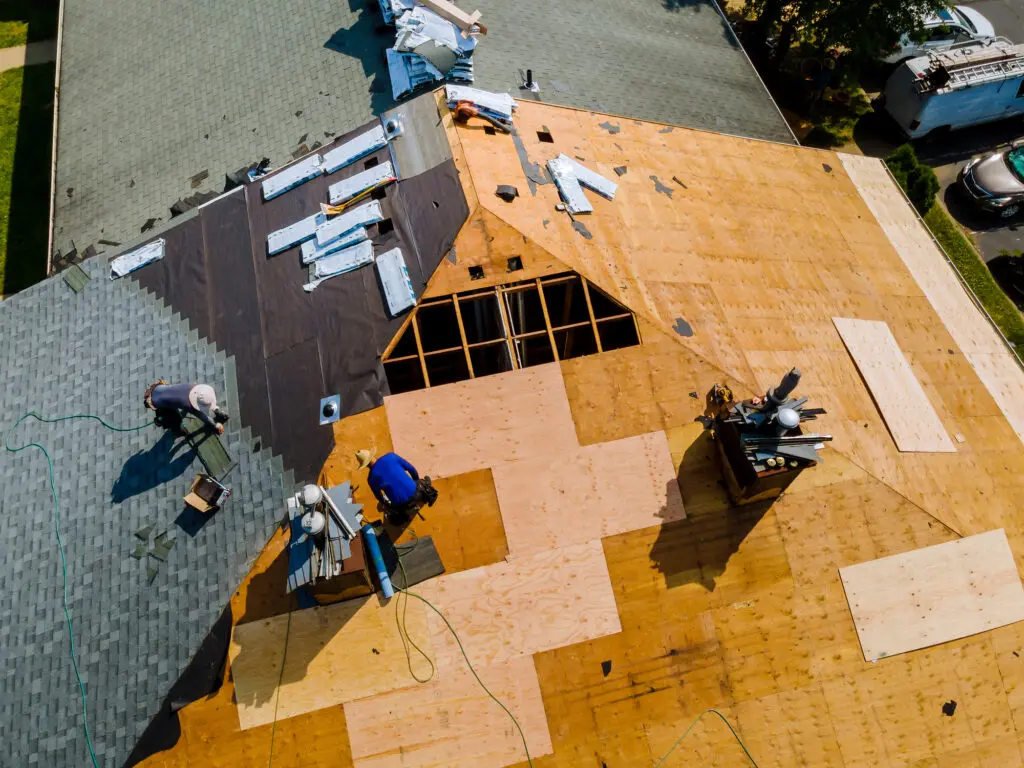
What Happens If Hidden Roof Decking Damage Is Found?
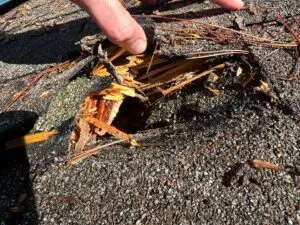
Roof decking sits beneath the roof covering and provides the structural surface to which roofing materials are attached.
Some decking conditions cannot be fully evaluated until the existing shingles and underlayment are removed. During replacement, a contractor may discover:
- Rotten or deteriorated wood
- Delaminated sheathing
- Water-damaged sections
- Openings or gaps
- Previously repaired areas
- Decking that may not provide a suitable fastening surface
Whether insurance covers decking work depends on the cause of the damage, the policy, the insurer’s findings, and the claim decision.
Homeowners can learn more by reviewing our guide explaining when roof decking may need to be replaced.
How Do North Carolina Storms Affect Roof Claims?
Homes throughout the Triangle can be exposed to severe thunderstorms, high winds, wind-driven rain, hail, tropical systems, hurricane remnants, and falling tree debris.
Storm-related roof conditions can include:
- Missing shingles
- Lifted or creased shingles
- Impact marks
- Damaged flashing
- Damage caused by branches or falling debris
- Water intrusion following exterior damage
Normal aging may produce different conditions, such as gradual granule loss, weathering, brittle materials, deteriorated pipe boots, or long-term maintenance issues.
Insurance decisions generally depend on the cause of the damage and the policy’s coverage. Homeowners who are uncertain about the cause can begin by learning the difference between storm damage and normal roof wear.
What Should You Do After Receiving the Insurance Estimate?
- Review the claim summary. Identify the RCV, ACV, depreciation, deductible, and initial payment.
- Read the coverage notes. Check for exclusions, limitations, payment conditions, and documentation requirements.
- Ask questions in writing. Request clarification from the insurer about anything you do not understand.
- Compare the scopes. Review the insurance estimate against the roofing contractor’s proposed scope.
- Keep complete records. Save estimates, photographs, contracts, invoices, receipts, emails, and claim correspondence.
- Confirm depreciation requirements. Ask what must be submitted to request any eligible recoverable depreciation.
Questions to Ask Your Insurance Company
- Is my roof covered at Actual Cash Value or Replacement Cost Value?
- How much depreciation was applied?
- Is the depreciation recoverable?
- What deductible applies to this loss?
- Is the deductible a fixed amount or a percentage?
- What documents are required after the work is completed?
- Is there a deadline for completing repairs or requesting depreciation?
- Who should receive questions about missing or disputed scope items?
- Does my mortgage company need to be involved with the payment?
Questions to Ask the Roofing Contractor
- Does the proposal clearly describe the roofing system and materials?
- Are tear-off, disposal, underlayment, flashing, ventilation, and accessories included?
- How will hidden decking conditions be documented?
- How are additional work and change orders approved?
- Will I receive photographs and a final invoice?
- What workmanship and manufacturer warranties apply?
- Who should I contact if I have questions during the project?
Common Roof Insurance Claim Mistakes
Assuming the First Check Is the Final Payment
The first payment may reflect Actual Cash Value after the deductible and depreciation are subtracted. If recoverable depreciation applies, additional eligible funds may be available after the insurer’s requirements are met.
Assuming Every Policy Pays Replacement Cost
Not every policy provides the same coverage. Some roofs may be subject to Actual Cash Value coverage, special endorsements, exclusions, or payment limitations.
Not Reviewing the Deductible
A homeowner may have different deductibles for different types of losses. Review the declarations page and ask the insurance company which deductible applies to the reported event.
Comparing Only the Final Totals
Two estimates can have similar totals but significantly different scopes. Compare the measurements, materials, quantities, accessories, and installation details.
Discarding Claim Documents
Keep copies of all estimates, photographs, receipts, invoices, contracts, payment records, and correspondence. These records may be needed to document completed work.
Frequently Asked Questions About Roof Insurance Payments
What does ACV mean on a roof insurance estimate?
ACV means Actual Cash Value. It generally represents the estimated cost to repair or replace damaged property after depreciation is deducted.
What does RCV mean on a roof insurance estimate?
RCV means Replacement Cost Value. It generally represents the estimated cost to repair or replace damaged property at current prices, subject to the policy’s coverage and claim-specific terms.
Why did the insurance company subtract depreciation?
Depreciation reflects a reduction in value associated with age or use. Whether that depreciation is recoverable depends on the policy and claim.
What is recoverable depreciation on a roof claim?
Recoverable depreciation is an amount that may be eligible for payment after covered repair or replacement work is completed and the insurer’s documentation requirements are satisfied.
Do I have to pay my roof insurance deductible?
The deductible is generally the policyholder’s portion of a covered claim. Confirm the amount and type of deductible on your declarations page and with your insurance carrier.
Why is the roofing contractor’s estimate higher than the insurance estimate?
The estimates may use different measurements, materials, quantities, scopes, or inspection findings. Hidden damage, flashing, ventilation, decking, accessories, and applicable code requirements can also affect the proposed scope.
Does homeowners insurance automatically pay for a complete roof replacement?
No. The insurance company evaluates the cause and extent of direct physical damage under the terms of the individual policy. An approved claim does not automatically mean that every roof component or the entire roof will be replaced.
Can insurance cover damaged roof decking?
Coverage depends on what caused the decking damage, the terms of the policy, and the insurer’s claim decision. Deterioration caused by age or long-term moisture may be treated differently from direct covered damage.
Can my first insurance check include my mortgage company?
A mortgage company may be included on a property claim payment because it has a financial interest in the home. Ask the insurer and mortgage company about any applicable endorsement, inspection, or fund-release requirements.
Who should explain my roof insurance coverage?
Your insurance company or licensed insurance professional should explain coverage, deductibles, depreciation, exclusions, and claim decisions. A roofing contractor can inspect the roof, document physical conditions, and explain the proposed roofing work, but should not make coverage decisions for the insurer.
Get your free inspection today—no obligation, perfect for on-the-go homeowners.
Schedule Your FREE Roof Inspection Now
Call: (919) 906-3791 | Family-owned | Serving Apex, Cary, Raleigh, Holly Springs, Fuquay-Varina & Triangle NC