What Qualifies as a Roofing Emergency in the NC Triangle and Nearby Cities?
Not all roofing problems require immediate action, but certain situations should be treated as true emergencies. Across the NC Triangle and nearby cities, severe thunderstorms, strong winds, heavy rain, and falling debris can quickly turn small roof issues into active interior damage.
According to the National Weather Service Raleigh Forecast Office, North Carolina experiences frequent wind‑driven storms capable of loosening shingles and forcing water into vulnerable roof areas.
An emergency roof repair is usually necessary when water is actively entering the home or when roof damage exposes interior areas to the elements.
—
Common Emergency Roof Repair Situations in Triangle Area Homes
Based on regional housing styles and storm patterns affecting Apex, Cary, Raleigh, and surrounding communities, emergency roof repair situations most often involve:
- Active roof leaks during heavy or prolonged rainfall
- Missing or blown‑off shingles following wind events
- Tree limb or wind‑driven debris impacts
- Sudden flashing failure around chimneys and roof‑to‑wall transitions
The Insurance Institute for Business & Home Safety (IBHS) consistently identifies roofing systems as the most vulnerable part of the home during severe weather, noting that once water breaches the roof covering, interior damage can escalate rapidly.
—
Emergency Roof Repair Across the NC Triangle
Roofing emergencies are not limited to a single city. Homes across the Triangle — including Apex, Cary, Raleigh, Morrisville, and surrounding areas — experience similar risks from storms, falling debris, and aging roofing materials.
Differences in home age, tree coverage, roof design, and drainage systems mean that emergency scenarios can vary widely, making proper evaluation essential when storms hit.
—
What to Do First During a Roofing Emergency
If you suspect a roofing emergency, safety should always come first. Avoid entering attics during active storms or attempting roof access when conditions are wet, windy, or unstable.
The Federal Emergency Management Agency (FEMA) recommends prioritizing personal safety and preventing additional interior damage until professional help can assess the situation.
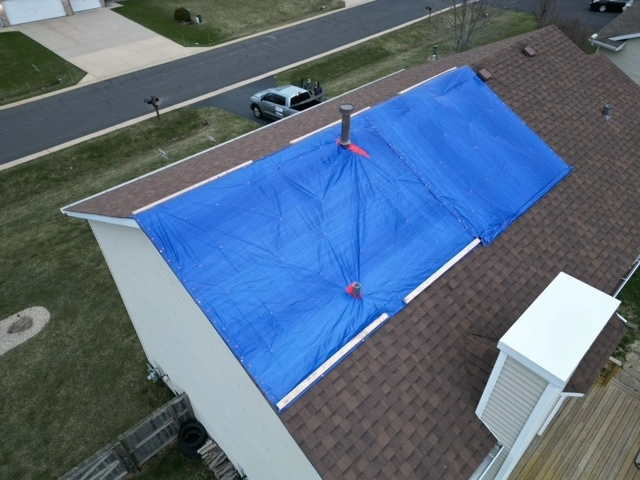
Many homeowners begin by learning what emergency response typically involves through professional roof repair services, followed by temporary stabilization measures — such as controlled water diversion or protective covering — until permanent repairs can be completed safely.
—
How Emergency Roof Repairs Are Typically Handled
Emergency roof repair focuses on stopping active damage first. This may include securing exposed roof areas, stabilizing lifted materials, or sealing points where water is entering the home.
IBHS research shows that even small breaches can allow significant water intrusion during storms, which is why temporary stabilization plays a crucial role in minimizing secondary damage.
—
When an Emergency Repair Signals a Larger Roofing Issue
While many emergencies can be resolved with targeted repairs, some warning signs suggest a broader roofing concern:
- Repeated emergency repairs in different roof areas
- Multiple active leaks during a single storm
- Widespread shingle or flashing deterioration
- A roof nearing the end of its expected service life
In these cases, homeowners often begin planning ahead for roof replacement rather than relying on ongoing emergency fixes.
—
The Role of Gutters During Roofing Emergencies
Gutter performance plays a major role during heavy storms. According to IBHS guidance, clogged or poorly pitched gutters can force large volumes of water back under shingles and flashing, worsening emergency leak situations.
Many Triangle homeowners address drainage concerns alongside roof repairs by improving water flow away from the home. Local solutions are available through Quality Seamless Gutters.
—
Do Emergency Roof Repairs Require Permits?
Emergency repairs intended to stop active damage are often non‑structural and may not require permits. However, follow‑up work involving structural components can vary by municipality.
For Raleigh homeowners, official requirements are maintained by the City of Raleigh Planning and Development Services.
—
Why Inspections Matter After an Emergency Repair
Once conditions stabilize, a professional roof inspection helps identify hidden moisture, secondary damage, and areas likely to fail next.
Both IBHS and the National Weather Service emphasize that post‑storm inspections are critical for preventing minor emergency damage from becoming long‑term structural problems.
—
Making Smart Decisions During Roofing Emergencies
Roofing emergencies are stressful, but informed decisions help limit damage. Homeowners throughout the NC Triangle and nearby cities benefit from quick stabilization, honest evaluation, and proper follow‑up planning.
Based in Apex, Artisan Quality Roofing serves Cary, Raleigh, and surrounding communities with emergency roof repair guidance grounded in regional weather patterns and proven roofing practices.
Get your free inspection today—no obligation, perfect for on-the-go homeowners.
Schedule Your FREE Roof Inspection Now
Call: (919) 906-3791 | Family-owned | Serving Apex, Cary, Raleigh, Holly Springs, Fuquay-Varina & Triangle NC